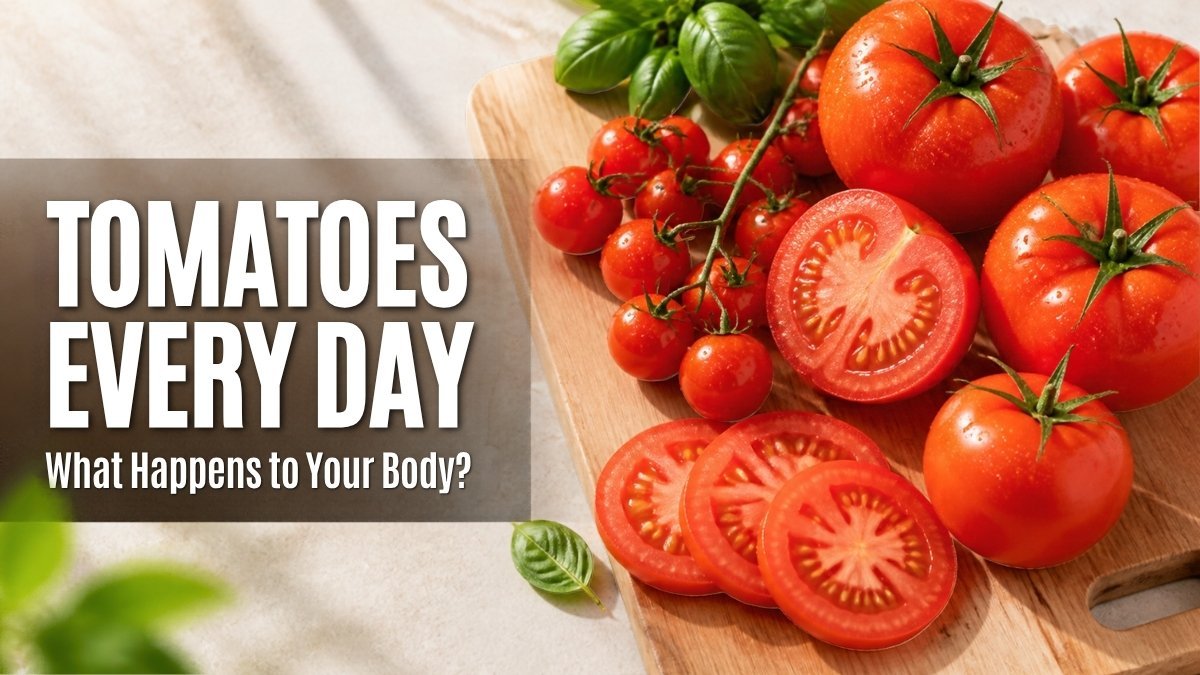
Eating a tomato every day is a simple habit that may support your heart, skin and digestion. Tomatoes are low in calories, mostly water, and rich in vitamin C, potassium and lycopene, an antioxidant that gives them their red color. They’re not a miracle food, but as part of a balanced diet they bring a lot of nutrition for very little cost.
Tomato Nutrition at a Glance
Here is roughly what you get from one medium raw tomato (about 4 ounces). Values are approximate and vary by size and variety.
| Nutrient | 1 medium tomato (approx.) |
|---|---|
| Calories | About 22 |
| Water | About 95% |
| Carbohydrates | About 5 g |
| Fiber | About 1.5 g |
| Protein | About 1 g |
| Vitamin C | About 15–17 mg (roughly 15–20% of daily needs) |
| Potassium | About 290 mg |
| Vitamin K, folate, vitamin A | Small but useful amounts |
| Lycopene | A few milligrams (more in cooked tomato products) |
1. Your Heart May Get Some Support
Tomatoes have a few things going for them when it comes to heart health:
- Potassium helps balance the effects of sodium and may support healthy blood pressure.
- Lycopene has been linked in observational studies to lower rates of heart disease, and some small trials suggest tomato products may modestly improve cholesterol and blood vessel function.
- Fiber may help lower LDL (“bad”) cholesterol a little over time.
Most of this research shows links, not proof, and the effects are small. Still, swapping salty or processed sides for tomatoes is a simple heart-friendly move.
2. Your Skin May Get a Little Extra Protection
Some small studies found that people who ate tomato paste or lycopene-rich foods daily for several weeks had slightly less skin redness after UV exposure. The effect was modest. Tomatoes can be part of a skin-friendly diet, but they are not a replacement for sunscreen. Their vitamin C also helps your body make collagen, which supports skin structure.
3. Your Digestion May Improve
With their high water content and a bit of fiber, tomatoes may help keep things moving and support regularity, especially when you eat them alongside other vegetables, beans and whole grains. Fiber also feeds the helpful bacteria in your gut.
4. Blood Sugar Stays Steady
Tomatoes are low in carbohydrates and sugar, and they have a low glycemic impact. That makes them an easy, filling choice for people watching their blood sugar, including people with type 2 diabetes.
5. Your Eyes Get Helpful Nutrients
Tomatoes provide beta-carotene, which your body turns into vitamin A, along with small amounts of lutein and zeaxanthin. These nutrients are linked to healthy vision and may help protect the eyes as you age.
Raw vs Cooked Tomatoes: Which Is Better?
Both are good. They just shine in different ways:
| Raw tomatoes | Cooked tomatoes (sauce, paste, soup) | |
|---|---|---|
| Vitamin C | Higher | Lower (some is lost to heat) |
| Lycopene absorption | Lower | Higher, especially with a little olive oil |
| Sodium | Very low | Can be high in canned and jarred products |
| Best for | Salads, snacks, sandwiches | Sauces, stews, soups |
A mix of both gives you the best of each. Cooking tomatoes with a drizzle of olive oil may help your body absorb more lycopene, since it’s a fat-soluble compound.
Possible Downsides to Keep in Mind
- Acid reflux. Tomatoes are acidic and can trigger heartburn in some people.
- Kidney disease. If you’ve been told to limit potassium, ask your doctor how many tomatoes fit your plan.
- Sodium in packaged products. Canned tomatoes, sauces, ketchup and tomato juice can be high in salt. Look for “no salt added” labels.
- Allergies. Tomato allergy is uncommon, but some people react with itching or a rash.
- Medicine interactions. If you take a potassium-sparing medicine or certain blood pressure drugs, talk to your doctor about your total potassium intake.
How Many Tomatoes Is Enough?
There’s no official target for tomatoes specifically. US dietary guidelines suggest most adults aim for about 2 to 3 cups of vegetables a day, and tomatoes can be one part of that. For most people, one medium tomato, a handful of cherry tomatoes, or about half a cup of tomato sauce a day is a reasonable amount.
Variety still matters most. Tomatoes are a great everyday choice, but they work best alongside leafy greens, beans, carrots, peppers and other colorful vegetables that bring different nutrients to the table.
Easy Ways to Eat Tomatoes Every Day
- Slice them onto whole-grain toast with a little olive oil and black pepper.
- Add cherry tomatoes to salads, grain bowls or a snack plate.
- Make a simple sauce with canned no-salt-added tomatoes, garlic and olive oil.
- Toss them into omelets, soups, chili and bean dishes.
- Roast them with herbs as a side dish.
The Bottom Line
Eating tomatoes every day may help support your heart, skin, digestion and eyes, all for very few calories. Raw tomatoes give you more vitamin C, while cooked tomatoes with a little olive oil give you more usable lycopene, so enjoy both. Keep an eye on sodium in packaged products, and talk to your doctor if you have reflux, kidney disease or take medicines that affect potassium.
This article is for general information only and is not medical advice. Talk to your doctor or a registered dietitian about what’s right for you.