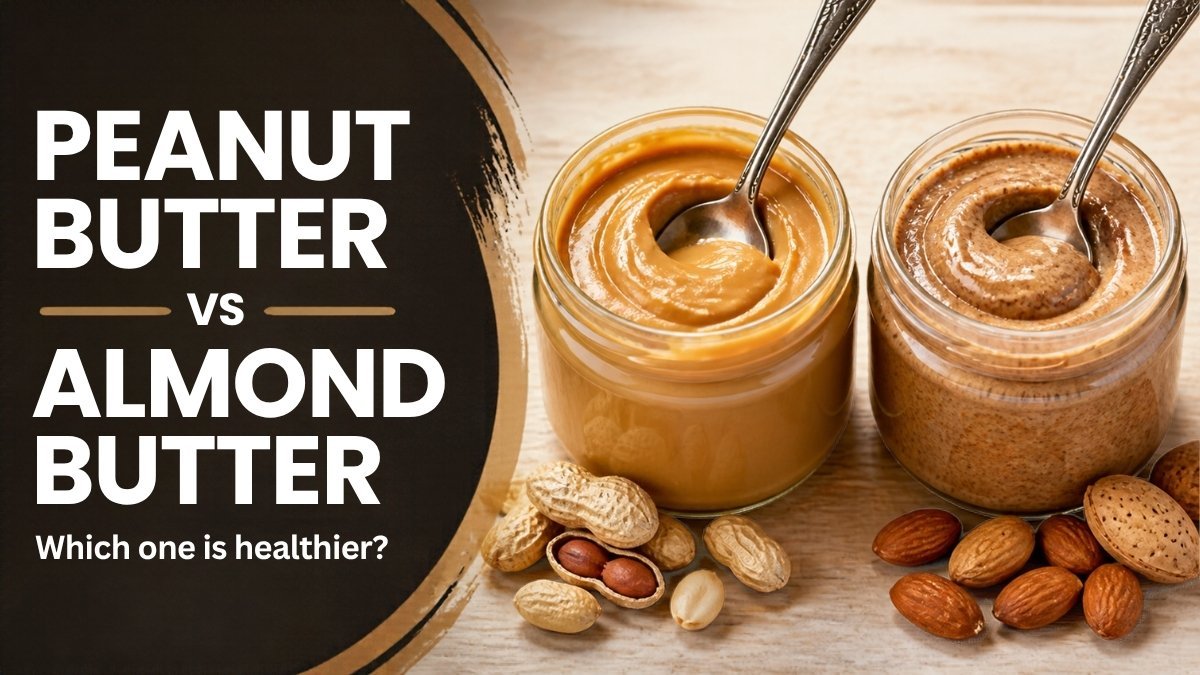
Both peanut butter and almond butter can be part of a healthy diet, and the gap between them is smaller than many people think. Almond butter has a slight edge: it offers more fiber, vitamin E, magnesium and calcium, and less saturated fat. Peanut butter, on the other hand, has a little more protein, is usually much cheaper and is just as satisfying. For most people, the type you pick matters less than choosing a jar with a short ingredient list and keeping an eye on portion size.
Peanut Butter vs Almond Butter: Nutrition Compared
Here’s an approximate comparison for a standard 2-tablespoon (about 32-gram) serving of plain, unsweetened nut butter. Exact numbers vary by brand, roast and whether salt or sugar has been added.
| Per 2 tbsp (~32 g) | Peanut butter | Almond butter |
|---|---|---|
| Calories | About 190 | About 195 |
| Protein | About 7–8 g | About 6.5–7 g |
| Total fat | About 16 g | About 18 g |
| Saturated fat | About 3 g | About 1.5 g |
| Monounsaturated fat | About 8 g | About 10 g |
| Carbohydrates | About 7 g | About 6 g |
| Fiber | About 2 g | About 3 g |
| Sugar (no sugar added) | About 1–2 g | About 1–2 g |
| Vitamin E | About 3 mg | About 7–8 mg |
| Magnesium | About 50 mg | About 90 mg |
| Calcium | About 15 mg | About 110 mg |
| Niacin (vitamin B3) | About 4 mg | About 1 mg |
As you can see, calories are nearly identical. Both are energy-dense foods, so a heaping spoonful can easily turn into 300 calories or more without you noticing.
Where Almond Butter Comes Out Ahead
Almonds are naturally rich in several nutrients that many Americans don’t get enough of. Compared with peanut butter, almond butter typically offers:
- More vitamin E. A 2-tablespoon serving can provide roughly half of the daily value for vitamin E, an antioxidant that helps protect cells from damage.
- More magnesium. Magnesium plays a role in muscle and nerve function, blood sugar control and blood pressure regulation.
- More calcium and fiber. The amounts aren’t huge, but they add up over a day.
- Less saturated fat and more monounsaturated fat. This fat profile is similar to olive oil and is generally considered heart-friendly.
Research on eating nuts regularly has linked them with better cholesterol levels and a lower risk of heart disease. Almonds in particular have been studied for their potential to help modestly lower LDL (“bad”) cholesterol when they replace less healthy snacks.
Where Peanut Butter Holds Its Own
Peanuts are technically legumes, not tree nuts, but nutritionally they behave a lot like nuts. Peanut butter has some real advantages of its own:
- Slightly more protein. The difference is about a gram per serving, which makes peanut butter a popular choice for active people.
- Plenty of niacin. Peanut butter is one of the better food sources of vitamin B3, which helps your body turn food into energy.
- Lower cost. Almond butter often costs two to three times as much per jar, which matters if nut butter is a daily staple.
- Widely studied. Peanuts and peanut butter have also been associated with heart benefits in large observational studies when eaten in place of refined carbs or processed meats.
In other words, a natural peanut butter is still a nutritious food. The saturated fat difference is modest, and most of the fat in peanut butter is the unsaturated kind.
The Label Matters More Than the Nut
A jar of almond butter loaded with added sugar and oils may be a worse choice than a plain peanut butter. When you’re shopping, flip the jar over and look for:
- Short ingredient lists. Ideally just nuts, or nuts and a little salt.
- No partially hydrogenated oils. Some “no-stir” brands add palm oil or other fats to keep the oil from separating.
- Little or no added sugar. Flavored, honey-roasted and “reduced-fat” versions often contain extra sugar to make up for taste.
- Moderate sodium. Unsalted or lightly salted versions are better if you’re watching your blood pressure.
Oil separation at the top of a natural nut butter is normal. Just stir it back in, and store the jar in the fridge if you want it to stay mixed longer.
Which Is Better for Your Goals?
Both spreads can work for different needs. Here’s how they compare for common goals:
- Heart health: Almond butter has a slightly better fat profile, but either one may support heart health when it replaces butter, processed meats or sugary spreads.
- Weight management: Both are filling thanks to fat, protein and fiber. Portion control matters far more than which one you choose.
- Blood sugar: Both are low in carbs and may help slow the rise in blood sugar when paired with fruit, toast or oatmeal.
- Building muscle: Peanut butter has a small protein edge, though neither is a major protein source on its own.
- Budget: Peanut butter wins easily.
Who Should Be Careful
Nut butters aren’t right for everyone. Keep these points in mind:
- Allergies: Peanut and tree nut allergies are separate, but some people are allergic to both. If you have either allergy, talk to your allergist before trying the other.
- Calorie needs: If you’re watching your weight, measure your servings with a spoon rather than eyeballing them.
- Kidney concerns: People who need to limit certain minerals, such as phosphorus or potassium, should ask their care team how much nut butter fits their plan.
Easy Ways to Enjoy Nut Butter
- Spread a thin layer on whole-grain toast and top with sliced banana or berries.
- Stir a spoonful into oatmeal for extra staying power.
- Dip apple slices, celery or carrot sticks for a balanced snack.
- Blend into a smoothie with milk or yogurt and frozen fruit.
- Whisk with soy sauce, lime and a little water for a quick sauce over noodles or vegetables.
The Bottom Line
Almond butter is slightly more nutrient-dense, with more vitamin E, magnesium, calcium and fiber and less saturated fat. Peanut butter offers a bit more protein and niacin at a much lower price. Both can fit into a heart-healthy diet. The smartest move is to pick the one you enjoy and can afford, choose a natural version with minimal added ingredients and stick to about 2 tablespoons at a time.
This article is for general information only and is not medical advice. Talk to your doctor or a registered dietitian about what’s right for you.