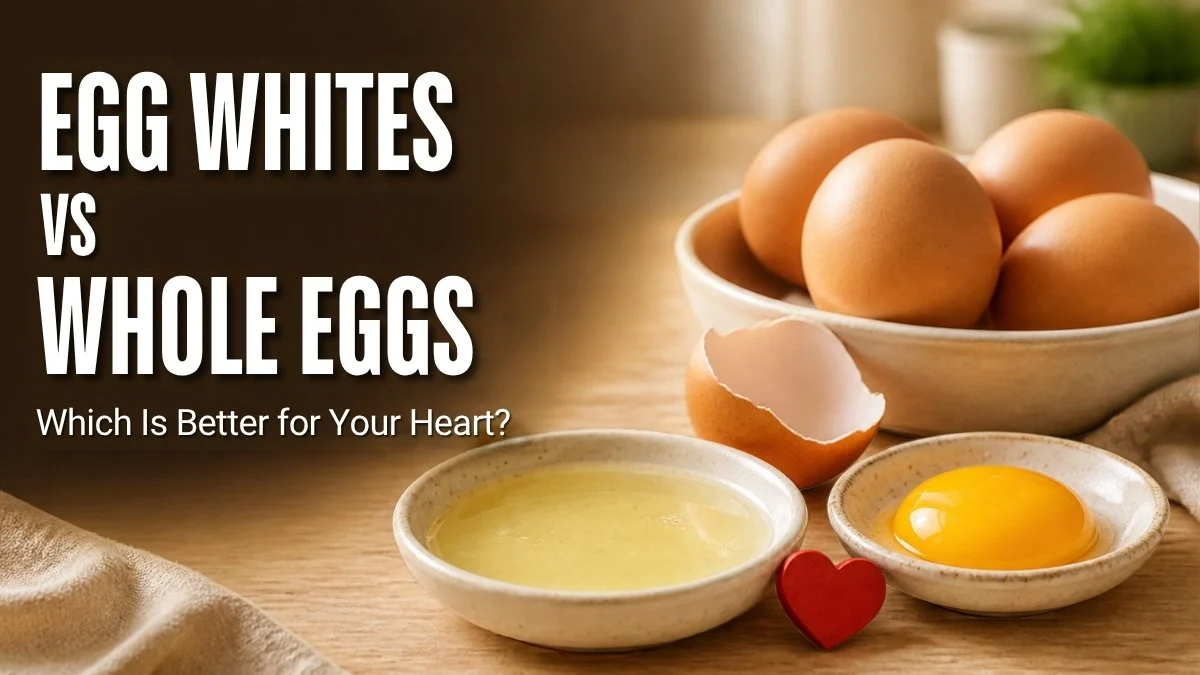
For years, egg yolks were treated like a heart attack on a plate. Diet plans told people to throw them away and eat only the whites. But nutrition science has moved on. So which is really better for your heart: egg whites or whole eggs? The honest answer is that it depends on your health, how many eggs you eat, and what you eat them with.
Egg Whites vs Whole Eggs: Nutrition at a Glance
Here is roughly what you get from one large egg compared with the white of one large egg. Values are approximate and vary by egg size.
| Nutrient | Whole egg (1 large) | Egg white (1 large) |
|---|---|---|
| Calories | About 70–75 | About 17 |
| Protein | About 6 g | About 3.5 g |
| Total fat | About 5 g | Almost 0 g |
| Saturated fat | About 1.5 g | 0 g |
| Cholesterol | About 185 mg | 0 mg |
| Choline | About 145 mg | Very little |
| Vitamin D, B12, A | Yes (in the yolk) | Very little |
| Lutein & zeaxanthin | Yes (in the yolk) | None |
The pattern is simple. The white is almost pure protein and water. The yolk holds all of the fat and cholesterol, but also most of the vitamins, minerals and antioxidants.
Why Egg Yolks Got a Bad Reputation
One large egg yolk contains more than half of what older guidelines allowed as a daily cholesterol limit (300 mg). Because high blood cholesterol is linked to heart disease, it seemed logical that eating cholesterol would raise it.
Later research showed the link is weaker than people thought. For most people, the cholesterol you eat has a smaller effect on blood LDL (“bad”) cholesterol than saturated fat and trans fat do. Your liver also makes less cholesterol when you eat more of it. That is why the US Dietary Guidelines removed the strict 300 mg daily cap, while still advising people to keep dietary cholesterol fairly low as part of a healthy eating pattern.
There is an exception. Some people, often called “hyper-responders,” see a bigger rise in LDL when they eat more cholesterol. You can’t tell if you’re one of them without blood tests, which is one reason your doctor’s advice matters.
What the Research Says About Eggs and Heart Disease
Studies on eggs and heart health don’t all agree, but a few clear points stand out:
- Moderate intake looks safe for most healthy people. Large reviews of many studies have found that eating up to about one egg a day is not linked to a higher risk of heart disease in the general population.
- Very high intake is less clear. Some large studies have linked higher egg and dietary cholesterol intake with a modestly higher heart risk, so “unlimited eggs” is not the takeaway.
- Diabetes may change the picture. Several studies have found a stronger link between frequent egg eating and heart disease in people with type 2 diabetes.
- The rest of the plate matters. Eggs are often eaten with bacon, sausage, butter and white toast. Those foods may explain part of the risk seen in some studies.
The American Heart Association has said healthy people can include up to one whole egg a day in a heart-healthy diet, and that older adults with normal cholesterol may be able to have a little more.
The Case for Egg Whites
Egg whites make sense in some situations:
- You have high LDL cholesterol or heart disease, and your doctor has asked you to limit cholesterol and saturated fat.
- You want a lot of protein with very few calories, for example when you’re trying to lose weight.
- You eat many eggs a day, such as a 4–5 egg omelette. Swapping some yolks for whites keeps the protein high and cuts the cholesterol.
The Case for Whole Eggs
Throwing away every yolk means throwing away a lot of nutrition. The yolk gives you:
- Choline, which your body needs for brain and liver health, and which many people don’t get enough of.
- Vitamin D and B12, two nutrients that are hard to get from food alone.
- Lutein and zeaxanthin, antioxidants linked to eye health.
- More fullness. The fat in the yolk helps keep you satisfied, which may help you eat less later in the day.
For a healthy person eating one egg a day as part of a balanced diet, the whole egg is a nutritious, affordable choice.
So, Which Is Better for Your Heart?
| Your situation | Better choice |
|---|---|
| Healthy, normal cholesterol, 1 egg a day | Whole egg |
| High LDL cholesterol or heart disease | Mostly whites, yolks only as your doctor allows |
| Type 2 diabetes | Limit yolks; ask your doctor |
| Weight loss, high protein goal | Mix: 1 whole egg + 2 whites |
| Eating 3+ eggs at a time | Swap some yolks for whites |
A simple middle ground that works for many people is one whole egg plus two egg whites. You get most of the yolk’s nutrients, plenty of protein, and far less cholesterol than three whole eggs.
How to Eat Eggs the Heart-Healthy Way
- Cook gently. Boiled, poached or scrambled with a little olive oil beats frying in butter.
- Skip processed meat. Bacon, sausage and ham add saturated fat and salt, which are bigger worries for your heart than the egg itself.
- Add vegetables. Spinach, tomatoes, peppers and onions add fibre and potassium.
- Choose whole grains. Pair eggs with whole-grain toast or oats instead of white bread.
The Bottom Line
Egg whites aren’t “healthy” and yolks aren’t “bad.” Whites give you lean protein with no cholesterol. Yolks bring cholesterol but also vitamins, choline and antioxidants. For most healthy adults, about one whole egg a day fits well in a heart-healthy diet. If you have high cholesterol, heart disease or diabetes, lean more on whites and follow your doctor’s advice.
This article is for general information only and is not medical advice. Talk to your doctor or a registered dietitian about what’s right for you.