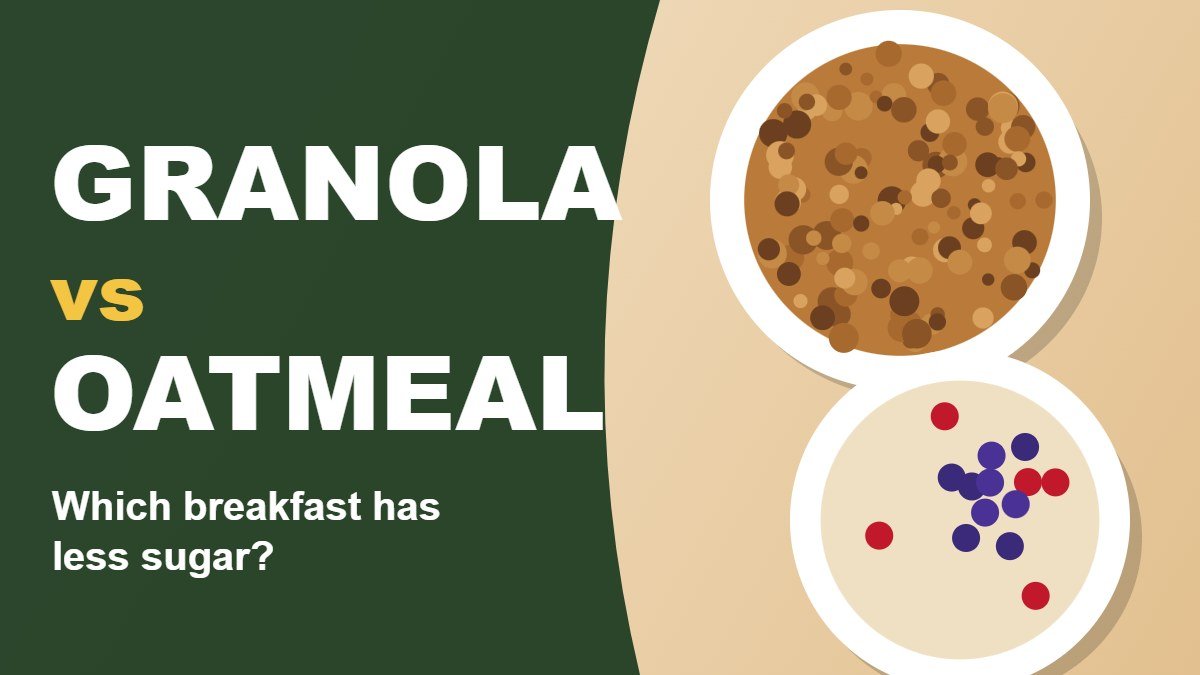
If sugar is your main concern, plain oatmeal wins easily. A bowl made from plain rolled or steel-cut oats has about 1 gram of naturally occurring sugar and no added sugar, while many store-bought granolas pack 8 to 15 grams of sugar per serving, much of it added. Granola can still fit into a healthy breakfast, but it works best as a topping rather than the whole bowl.
Granola vs Oatmeal: Nutrition Compared
Granola and oatmeal start with the same ingredient: oats. The difference is what happens next. Oatmeal is simply oats cooked in water or milk. Granola is oats mixed with sweeteners and oil, then baked until crunchy, often with nuts, seeds and dried fruit added. That baking step is where most of the extra sugar and calories come from.
Here’s an approximate comparison of typical servings. Brands vary a lot, so always check the label.
| Approximate values | Plain oatmeal (1/2 cup dry oats) | Flavored instant oatmeal (1 packet) | Typical granola (1/2 cup) |
|---|---|---|---|
| Calories | About 150 | About 150 to 170 | About 200 to 300 |
| Total sugar | About 1 g | About 10 to 13 g | About 8 to 15 g |
| Added sugar | 0 g | Often 8 to 12 g | Often 6 to 12 g |
| Fiber | About 4 g | About 3 g | About 2 to 5 g |
| Protein | About 5 g | About 4 g | About 4 to 7 g |
| Fat | About 3 g | About 2 to 3 g | About 6 to 14 g |
Two things stand out. First, granola is much more calorie-dense, so the same scoop delivers far more energy. Second, the serving size on granola labels is often just 1/4 or 1/3 cup, which is less than most people pour into a bowl. If you fill a cereal bowl with granola, you could easily be eating two or three servings.
Why Granola Often Has More Sugar
To get those crunchy clusters, most granola recipes rely on sweeteners that act like glue. Common ones include:
- Cane sugar or brown sugar
- Honey, maple syrup or agave
- Brown rice syrup or tapioca syrup
- Dried fruit, especially sweetened cranberries
- Chocolate chips or yogurt coatings
Words like “natural,” “organic” or “ancient grains” don’t mean low sugar. Honey and maple syrup count as added sugars on the Nutrition Facts label just like white sugar does.
For context, the American Heart Association suggests keeping added sugar to about 25 grams a day for most women and about 36 grams a day for most men. A large bowl of sweetened granola could use up half or more of that before your day even starts.
The Case for Oatmeal
Plain oatmeal is one of the most nutritious, budget-friendly breakfasts you can make. Here’s why it stands out:
- Beta-glucan fiber. Oats are rich in a soluble fiber called beta-glucan, which forms a gel in your gut. Research suggests about 3 grams a day of oat beta-glucan may help lower LDL cholesterol, and the FDA allows a heart-health claim for oat foods on that basis.
- Steadier blood sugar. The soluble fiber in oats slows digestion, which may help prevent sharp spikes in blood sugar, especially with less-processed steel-cut or rolled oats.
- Staying full. A warm bowl of oatmeal is filling for relatively few calories, which may help you avoid a mid-morning snack attack.
- You control the sugar. Starting with plain oats means you decide what goes in, from cinnamon to fresh fruit.
The one catch: flavored instant oatmeal packets can be nearly as sweet as granola. If you buy instant oats, choose the plain or “original” variety and add your own toppings.
When Granola Can Be a Good Choice
Granola isn’t a bad food. It usually contains whole grains, and versions made with nuts and seeds can add healthy fats, a bit of protein and minerals like magnesium. It’s also convenient and doesn’t need cooking. The key is choosing well and keeping portions in check:
- Read the label. Look for granola with about 6 grams of added sugar or less per serving and at least 3 grams of fiber.
- Check the ingredient list. Oats, nuts or seeds should come first, not a sweetener.
- Measure your portion. Use a measuring cup at least once so you know what a real serving looks like.
- Use it as a topping. A couple of tablespoons sprinkled over plain Greek yogurt or oatmeal gives you crunch without a big sugar load.
- Make your own. Homemade granola lets you cut the sweetener way down and add more nuts, seeds and spices.
How to Build a Low-Sugar Breakfast Bowl
Whichever base you choose, a few simple swaps can keep sugar low and make your breakfast more satisfying:
- Sweeten with fresh or frozen berries, sliced banana or grated apple instead of syrup or brown sugar.
- Add warm spices like cinnamon, nutmeg or a dash of vanilla for flavor without sugar.
- Boost protein with Greek yogurt, milk, a scoop of nut butter or a cooked egg on the side.
- Stir in chia seeds, ground flaxseed or chopped walnuts for extra fiber and healthy fats.
- Try savory oatmeal topped with sautéed spinach, an egg and a pinch of cheese for a change of pace.
Which One Should You Choose?
- Choose plain oatmeal if you’re watching sugar, managing blood sugar, trying to lower cholesterol or want a filling breakfast for fewer calories.
- Choose granola, carefully, if you want a quick, no-cook option, and pick a lower-sugar brand in a measured portion.
- Combine them for the best of both: a bowl of oatmeal or yogurt topped with a small sprinkle of granola.
The Bottom Line
Oatmeal and granola come from the same grain, but plain oatmeal is the clear winner for less sugar and fewer calories. Its beta-glucan fiber may also help support healthy cholesterol and steadier blood sugar. Granola can still be part of a healthy diet when you choose a low-sugar brand, watch your portion and use it as a crunchy topping rather than the main event.
This article is for general information only and is not medical advice. Talk to your doctor or a registered dietitian about what’s right for you.