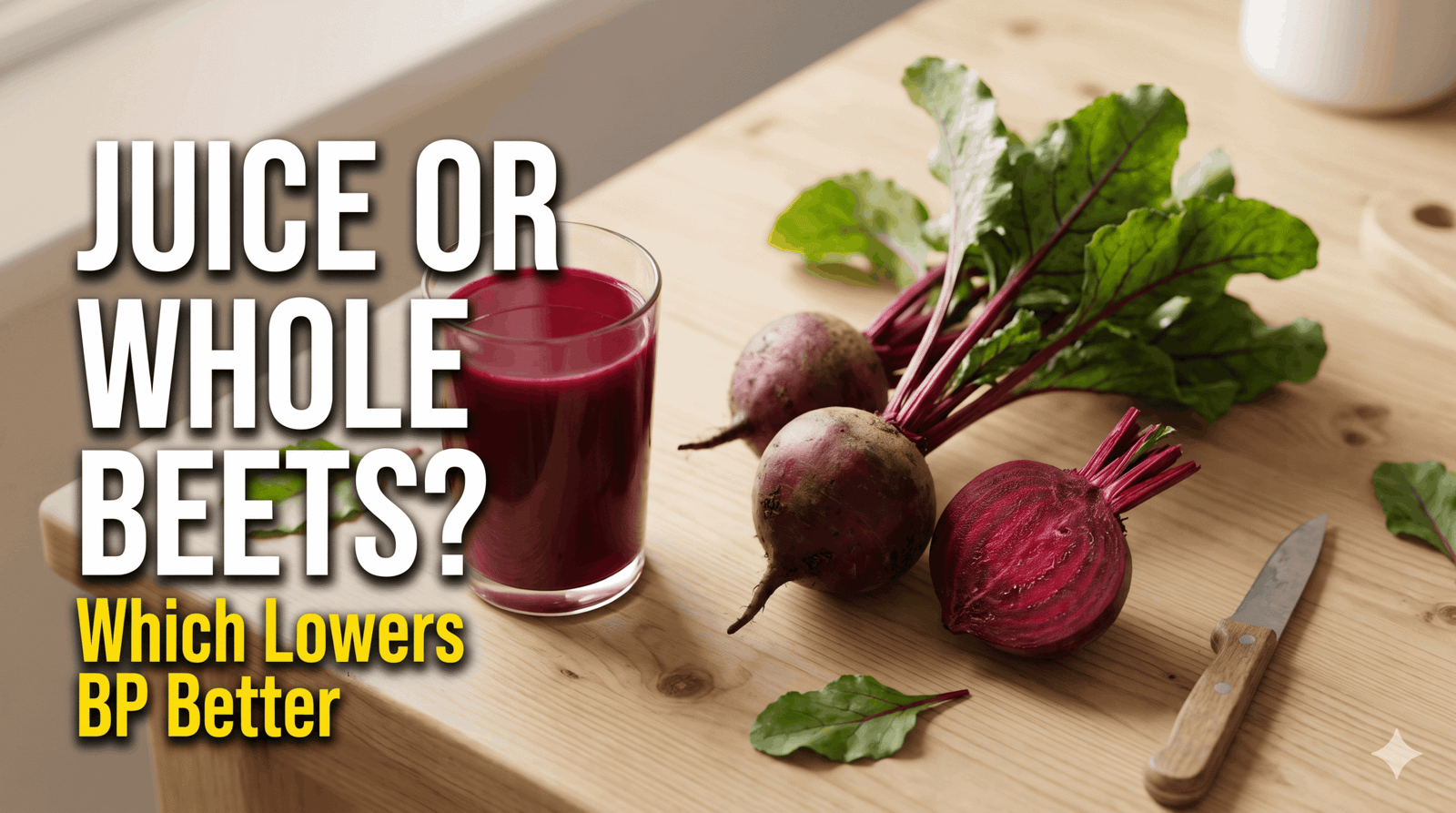
Beet Juice vs Whole Beets: Beets are one of the few everyday foods with solid research behind a blood pressure benefit. But should you drink them or eat them? The answer depends on whether you want a quick effect or a long-term habit.
Why Beets Affect Blood Pressure
The secret is dietary nitrate. Beets are one of the richest vegetable sources of it.
Here is the process, step by step:
- You eat or drink beets.
- Bacteria on your tongue convert nitrate into nitrite.
- Your body turns nitrite into nitric oxide.
- Nitric oxide relaxes and widens blood vessels, so pressure drops.
Step 2 matters more than people realize. We’ll come back to it.
Side-by-Side Comparison
| Factor | Beet Juice (250 ml) | Whole Beets (100 g, cooked) |
|---|---|---|
| Nitrate | High, concentrated | Moderate |
| Speed of effect | Within about 2–3 hours | Slower, gentler |
| Fiber | Almost none | About 2–3 g |
| Natural sugar | Higher (often 20 g+) | About 7–8 g |
| Feels filling? | No | Yes |
| Research backing | Most studies use juice | Fewer direct studies |
| Best for | Short-term, measurable dip | Everyday heart-healthy eating |
What the Research Says
Reviews of clinical trials show that regular beet juice can lower systolic pressure (the top number) by roughly 4–5 mmHg in many people. The effect on diastolic pressure (the bottom number) is smaller and less consistent.
That may sound small. But even a few points of drop across a population is linked with fewer heart attacks and strokes.
Two honest limits:
- Results vary a lot from person to person.
- The effect fades within about a day, so it only lasts if you keep drinking it regularly.
The Mouthwash Mistake
Remember the tongue bacteria from step 2? Antibacterial mouthwash can kill them. Some studies found that using strong mouthwash blunted the blood-pressure benefit of nitrate.
If you’re using beets for BP, skip strong antiseptic mouthwash for a few hours after drinking the juice. Brushing your teeth is fine.
So, Which Should You Choose?
- Want a measurable effect, like before a workout or as part of a BP routine? Beet juice.
- Want steady, everyday heart health? Whole beets. You get the fiber and less sugar.
- Watching blood sugar? Whole beets, or a small 100–150 ml glass of juice with a meal.
- Best overall: Eat whole beets a few times a week, and add juice occasionally.
Other nitrate-rich vegetables work too, like arugula (rocket), spinach, celery and lettuce.
Easy ways to eat whole beets:
- Roasted beet salad with feta and walnuts
- Grated raw beet in raita or coleslaw
- Beet tikki or cutlets
- Add half a beet to a fruit smoothie (keep the fiber)
Who Should Be Careful
- People on BP medicine: Beets can add to the effect. Talk to your doctor before drinking juice daily.
- People prone to kidney stones: Beets are high in oxalates.
- People taking nitrate heart medicines or erectile dysfunction drugs: Ask a doctor first.
- Pink urine or stool is harmless. It’s called beeturia.
FAQs
1. How fast does beet juice lower blood pressure?
In studies, the drop usually shows within about 2–3 hours of drinking it and fades within roughly 24 hours.
2. How much beet juice should I drink?
Most studies used about 70–250 ml a day. Start small, around half a glass, to check how your stomach handles it.
3. Is cooked beet as good as raw?
Cooking keeps most of the nitrate. Boiling can lose some into the water, so roasting or steaming is a little better.
4. Can beets replace my BP medication?
No. Beets can support healthy blood pressure, but never stop or change medicine without your doctor.
Disclaimer: For general information only; not a substitute for professional medical advice.