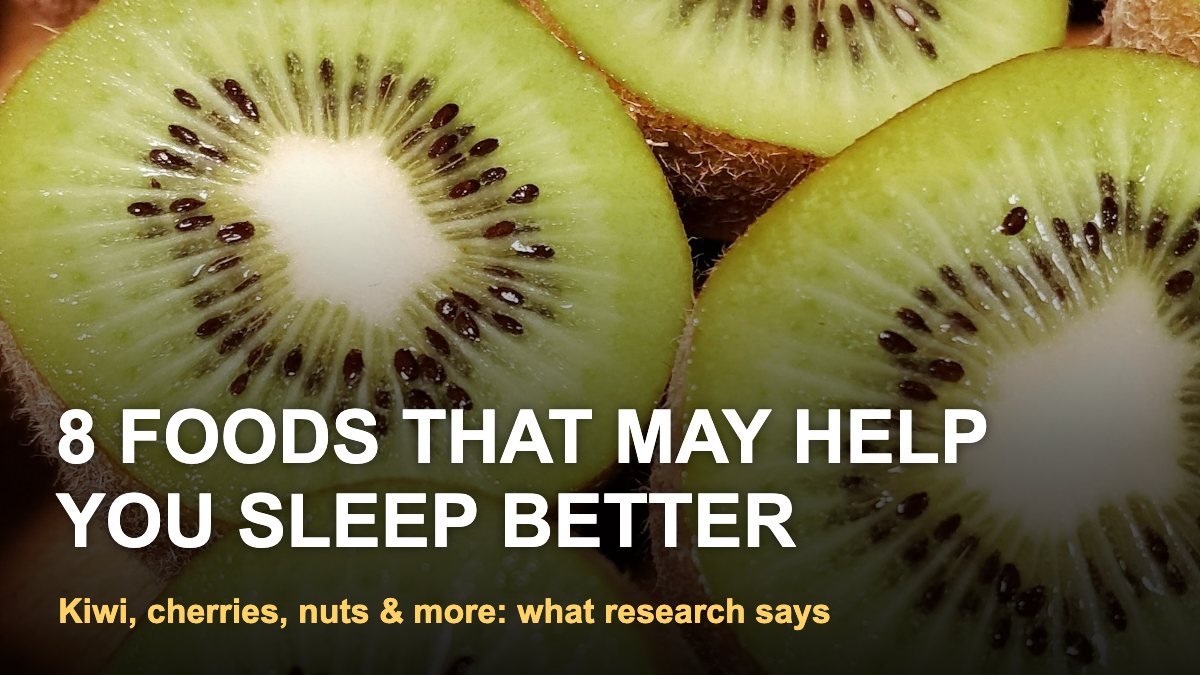
If you lie awake at night, what you eat in the evening may be part of the story. No food works like a sleeping pill, but some foods contain nutrients such as melatonin, magnesium, tryptophan and omega-3 fats that play a role in how your body winds down. Here are 8 foods that may help you sleep better, what the research actually says about each one, and how to eat them without upsetting your stomach before bed.
8 Sleep-Friendly Foods at a Glance
Here is a quick summary. The evidence ranges from a few small human studies to simple nutrient logic, so treat these as helpful habits, not cures.
| Food | Key nutrient | How it may help | Strength of evidence |
|---|---|---|---|
| Kiwi | Serotonin, vitamin C, folate | May help you fall asleep faster | Small human studies |
| Tart cherries / juice | Natural melatonin | May lengthen total sleep time | Small human studies |
| Fatty fish (salmon, mackerel) | Omega-3s, vitamin D | May support better sleep quality | Limited human studies |
| Almonds | Magnesium | Magnesium supports relaxation | Mostly indirect |
| Walnuts | Melatonin, healthy fats | Small amounts of melatonin | Mostly indirect |
| Warm milk | Tryptophan, calcium | Calming bedtime routine | Weak, partly habit |
| Oats | Complex carbs, magnesium | Steady energy, light evening meal | Indirect |
| Bananas | Magnesium, potassium | Supports muscle relaxation | Indirect |
1. Kiwi
Kiwi is one of the most studied fruits for sleep. In a small study from Taiwan, adults with sleep problems who ate two kiwis about one hour before bed for four weeks fell asleep faster and slept longer than before. Researchers think the fruit’s serotonin, antioxidants and folate may play a part.
The study was small and had no control group, so the results are encouraging rather than proven. Still, kiwi is low in calories and rich in vitamin C, so it is an easy evening snack to try.
2. Tart Cherries and Tart Cherry Juice
Tart cherries, such as Montmorency cherries, are one of the few foods that naturally contain melatonin, the hormone that helps regulate your sleep-wake cycle. A few small trials found that drinking tart cherry juice twice a day may modestly increase total sleep time in some adults, including older adults with insomnia.
Choose 100% tart cherry juice with no added sugar, and keep the serving small. A large glass of juice right before bed can mean extra sugar and extra trips to the bathroom.
3. Fatty Fish
Salmon, mackerel, sardines and trout give you omega-3 fats and vitamin D. Both nutrients are linked to how your body regulates serotonin, which it later uses to make melatonin. In one study, men who ate salmon three times a week for several months reported better overall sleep and daytime functioning than men who ate other protein foods.
Fatty fish is also good for your heart, so it earns a place in your weekly meals for more than one reason. Aim for two servings a week, ideally at dinner.
4. Almonds
A one-ounce handful of almonds (about 23 nuts) provides roughly 75–80 mg of magnesium. Magnesium helps your muscles and nervous system relax, and low magnesium levels have been linked to poorer sleep in some studies.
There is little direct research on almonds and sleep, so think of them as a smart, filling evening snack rather than a sleep aid. They are also calorie-dense, so stick to a small handful.
5. Walnuts
Walnuts contain small amounts of melatonin along with omega-3 ALA fat and magnesium. The amount of melatonin is much lower than in a supplement, but walnuts fit easily into a light evening snack. If you want to know more about their other benefits, see our guide on what happens when you eat walnuts every day.
6. Warm Milk
A glass of warm milk before bed is an old habit, and it may work partly because it is relaxing and familiar. Milk contains tryptophan, an amino acid your body uses to make serotonin and melatonin, plus calcium. On its own, the amount of tryptophan in one glass is unlikely to make you sleepy, but a calm routine can still signal to your brain that it is time to rest.
If dairy does not agree with you, a warm, unsweetened plant milk can give you the same comforting routine. Our almond milk vs oat milk comparison can help you choose.
7. Oats
A small bowl of oatmeal is a gentle evening option. Oats provide complex carbohydrates, fiber and some magnesium, and they digest slowly, so they are less likely to cause a sugar spike and crash than sweet desserts. Keep the toppings simple and skip the heavy syrup. Not all oat products are equal; our granola vs oatmeal guide explains why plain oats usually win.
8. Bananas
Bananas offer magnesium and potassium, two minerals that help your muscles relax, along with a little tryptophan. A banana with a spoon of nut butter is an easy, filling snack if you tend to wake up hungry in the night.
Foods and Drinks That May Make Sleep Worse
What you avoid in the evening can matter as much as what you eat.
- Caffeine after mid-afternoon: coffee, energy drinks, strong tea and cola can affect sleep for several hours.
- Alcohol: it may make you drowsy at first, but it often leads to lighter, broken sleep later in the night.
- Large, spicy or greasy meals late at night: these can trigger heartburn when you lie down.
- Lots of fluid right before bed: it can mean more bathroom trips.
- Very sugary snacks: a sugar spike late at night is not ideal for a calm wind-down.
How to Eat for Better Sleep
- Finish your main meal about 2–3 hours before bed.
- If you need a snack, keep it small: a kiwi, a few nuts or a banana.
- Keep a regular eating and sleeping schedule, even on weekends.
- Pair good food choices with other sleep habits: a dark, cool room, less screen time and a consistent bedtime.
The Bottom Line
Kiwi, tart cherries, fatty fish, almonds, walnuts, warm milk, oats and bananas may help support better sleep thanks to nutrients like melatonin, magnesium and omega-3s. The research is still limited and mostly small, so these foods work best as part of a healthy evening routine, not as a replacement for good sleep habits. If you regularly struggle to sleep, talk to a doctor, because ongoing insomnia can have medical causes that need proper care.
This article is for general information only and is not medical advice. Talk to your doctor or a registered dietitian about what’s right for you.