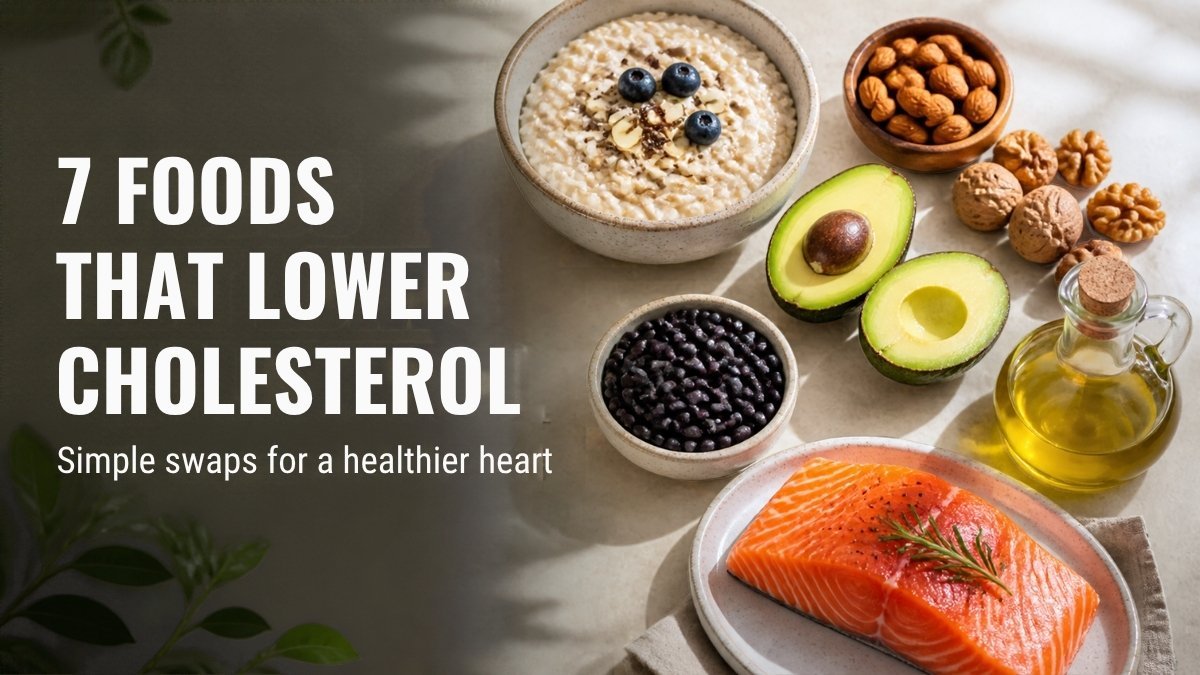
Some everyday foods may help lower LDL (“bad”) cholesterol, mainly by adding soluble fiber, healthy unsaturated fats and plant compounds to your diet. Oats, beans, nuts, fatty fish, avocados, olive oil and soy foods are among the best-studied options. None of them works like a medication, but together, and especially when they replace foods high in saturated fat, they can make a real difference over time.
How Food Can Affect Your Cholesterol
Most of the foods on this list help in one of a few ways:
- Soluble fiber forms a gel in your gut that binds to cholesterol-rich bile, so your body removes more of it.
- Unsaturated fats, when they replace saturated fats from butter, fatty meats and fried foods, may help lower LDL.
- Plant sterols and proteins can partly block cholesterol absorption or nudge how the liver handles it.
- Omega-3 fats mainly lower triglycerides, another blood fat linked to heart health.
1. Oats and Barley
Oats and barley are rich in beta-glucan, a type of soluble fiber. Getting about 3 grams of beta-glucan a day, roughly what you get from a bowl and a half of cooked oatmeal, has been shown in many studies to modestly lower LDL cholesterol. Choose plain rolled or steel-cut oats and add your own fruit instead of buying heavily sweetened instant packets.
2. Beans and Lentils
Black beans, chickpeas, kidney beans and lentils are packed with soluble fiber and plant protein. Eating about one serving a day (roughly half a cup to three-quarters of a cup cooked) has been linked to small drops in LDL. They’re also filling, which may make it easier to eat less red and processed meat.
- Add them to soups, salads, tacos and grain bowls.
- Rinse canned beans to cut down on sodium.
- Try hummus with vegetables as a snack.
3. Nuts
Almonds, walnuts, pistachios and peanuts provide unsaturated fats, fiber and plant sterols. A small handful a day, about 1 to 1.5 ounces, may help lower LDL a little. Nuts are calorie-dense, so they work best as a swap for chips, cookies or other snacks rather than an extra.
4. Fatty Fish
Salmon, sardines, mackerel and trout are top sources of omega-3 fats. Fish doesn’t lower LDL much on its own, but omega-3s may help lower triglycerides and support overall heart health. Eating fish a couple of times a week in place of red meat also cuts back on saturated fat. Baking, grilling or broiling is better than frying.
5. Avocados
Avocados are rich in monounsaturated fat and also bring fiber and potassium. Some research suggests eating avocado in place of foods high in saturated fat may help lower LDL. Try it on whole-grain toast instead of butter, or in salads and sandwiches instead of cheese or mayo.
6. Extra-Virgin Olive Oil
Olive oil is a cornerstone of the Mediterranean diet, which is consistently linked to better heart health. Its benefit comes mostly from replacing saturated fats such as butter, lard and coconut oil. Extra-virgin olive oil also contains polyphenols, plant compounds with antioxidant effects. Use it for sautéing, roasting and salad dressings.
7. Soy Foods
Tofu, edamame, tempeh and soy milk provide plant protein. Eating soy in place of animal protein may lower LDL slightly. The effect is modest, but soy is an easy way to add a meat-free meal or two each week.
Quick Comparison
| Food | Main helpful component | Easy daily serving (approx.) |
|---|---|---|
| Oats and barley | Beta-glucan (soluble fiber) | 1 to 1.5 cups cooked |
| Beans and lentils | Soluble fiber, plant protein | 1/2 to 3/4 cup cooked |
| Nuts | Unsaturated fat, plant sterols | 1 to 1.5 oz (a small handful) |
| Fatty fish | Omega-3 fats | 3 to 4 oz, about twice a week |
| Avocado | Monounsaturated fat, fiber | 1/3 to 1/2 avocado |
| Extra-virgin olive oil | Monounsaturated fat, polyphenols | 1 to 2 tablespoons in place of butter |
| Soy foods | Plant protein | 1 serving (e.g., 1/2 cup tofu or edamame) |
What a Cholesterol-Friendly Day Might Look Like
You don’t need to eat all seven foods every day. Here is one simple way to fit several of them in:
- Breakfast: oatmeal topped with berries and a spoonful of chopped walnuts.
- Lunch: a lentil or bean salad with leafy greens, tomatoes and an olive oil dressing.
- Snack: a small handful of almonds or a cup of edamame.
- Dinner: baked salmon with roasted vegetables and a side of barley, or a tofu stir-fry.
- Extras: sliced avocado on toast or in a wrap in place of butter or mayo.
Habits That Help Even More
- Cut back on saturated fat from fatty and processed meats, butter, full-fat cheese and many baked goods.
- Avoid trans fats, still found in some fried and packaged foods.
- Fill half your plate with vegetables and fruit, which add more fiber.
- Stay active: regular exercise may raise HDL (“good”) cholesterol and improve overall heart health.
- Don’t smoke, and keep alcohol moderate.
Food changes can help, but for some people, cholesterol is strongly shaped by genetics. If your doctor has prescribed a cholesterol-lowering medicine, keep taking it and use these foods as extra support, not a replacement.
The Bottom Line
Oats, beans, nuts, fatty fish, avocados, olive oil and soy foods may all help support healthier cholesterol levels, especially when they replace foods high in saturated fat. Each one has a modest effect, but combining several of them in your daily meals adds up. Pair these foods with regular activity and have your cholesterol checked as your doctor recommends.
This article is for general information only and is not medical advice. Talk to your doctor or a registered dietitian about what’s right for you.