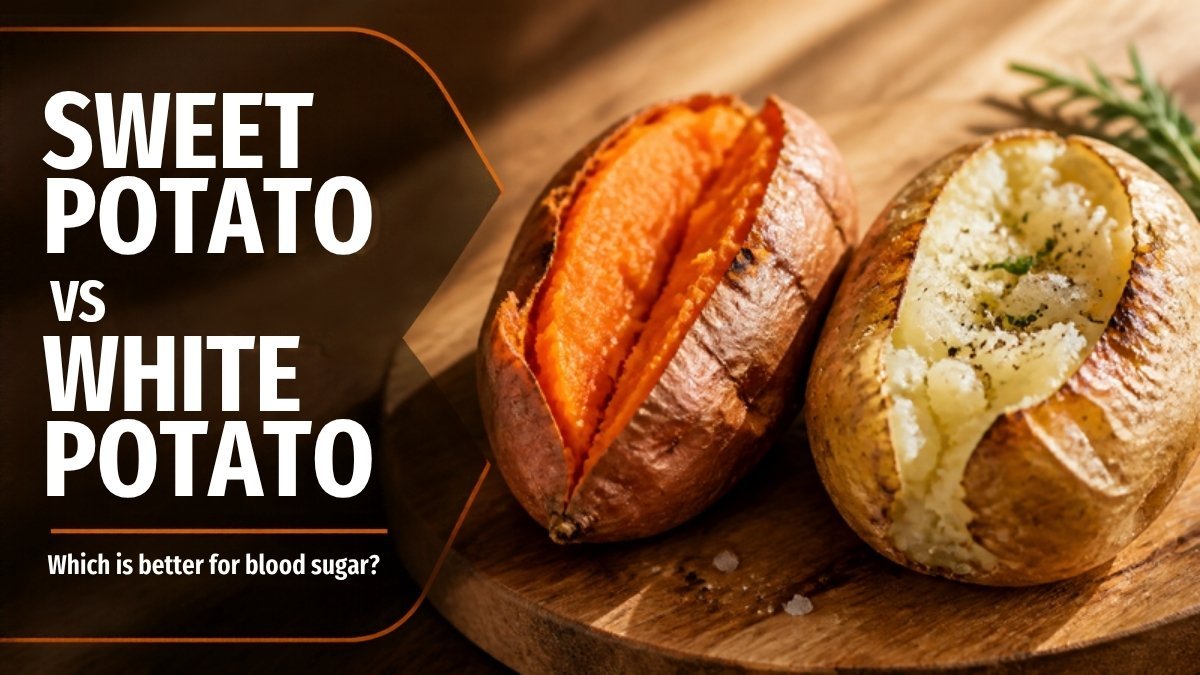
If blood sugar is your main concern, sweet potatoes usually have a slight edge over white potatoes, mainly because they bring a bit more fiber and, when boiled, tend to raise blood sugar more gently. But the difference is smaller than many people think. How you cook the potato, how much you eat, and what you pair it with often matter more than which color it is.
Sweet Potato vs White Potato: Nutrition Compared
Here is a rough side-by-side for one medium potato, baked with the skin on. Values are approximate and vary with size and variety.
| Nutrient (approx.) | Sweet potato (about 5 oz) | White potato (about 6 oz) |
|---|---|---|
| Calories | About 130–140 | About 160–170 |
| Total carbs | About 30 g | About 37 g |
| Fiber | About 4–5 g | About 3.5–4 g |
| Natural sugars | About 9–10 g | About 2 g |
| Protein | About 3 g | About 4–4.5 g |
| Potassium | About 650–700 mg | About 900–950 mg |
| Vitamin A | Very high (well over a day’s needs) | Almost none |
| Vitamin C | About 25–30 mg | About 12–15 mg |
Both are whole, nutrient-dense foods. Sweet potatoes stand out for vitamin A (from beta-carotene), while white potatoes are surprisingly strong in potassium and give a little more protein.
How Each One Affects Blood Sugar
Blood sugar response is usually described with the glycemic index (GI), which ranks how quickly a food raises blood glucose compared with pure sugar. Potatoes are tricky because their GI swings widely depending on type and cooking method.
- Boiled sweet potatoes tend to fall in the low-to-medium GI range.
- Baked or roasted sweet potatoes can land much higher, because dry heat breaks starch down into sugars that absorb quickly.
- White potatoes, especially baked russets and instant mashed potatoes, are usually in the high range.
- Cooled potatoes of either kind (think potato salad) form more resistant starch, which may blunt the blood sugar rise a little.
So a boiled sweet potato is generally gentler on blood sugar than a baked russet. But a roasted sweet potato and a boiled, cooled white potato may not be that far apart.
Why Sweet Potatoes Often Get the Edge
- A bit more fiber per calorie, which may slow digestion and help you feel full.
- Fewer total carbs in a typical serving, even though more of those carbs are natural sugars.
- Antioxidants like beta-carotene, and in purple varieties, anthocyanins.
- A lower GI when boiled, which is the cooking method most often studied.
Where White Potatoes Hold Their Own
White potatoes often get an unfair reputation, largely because of how they’re served: fried, loaded with butter and sour cream, or as chips. On their own, they offer real nutrition.
- More potassium, a mineral many Americans don’t get enough of and one that supports healthy blood pressure.
- Slightly more protein per potato.
- Very filling: plain boiled potatoes rank high on satiety, which may help with portion control.
- Affordable and versatile, which makes them an easy whole-food staple.
Is the Sugar in Sweet Potatoes a Problem?
Sweet potatoes taste sweeter because a larger share of their carbohydrate is natural sugar, mostly sucrose, glucose and maltose. That can sound worrying, but total carbohydrate and fiber matter more for blood sugar than the sugar number alone. A medium sweet potato still has fewer total carbs than a medium white potato, and its sugar comes packaged with fiber, water and nutrients, not added sugar.
Where sweet potatoes can work against you is in how they’re often prepared:
- Candied yams and casseroles with brown sugar or marshmallows
- Sweet potato fries cooked in a lot of oil
- Large restaurant portions that easily double a normal serving
Keeping them simple, such as boiled, steamed or lightly roasted with olive oil and spices, keeps most of the benefits.
Cooking Tips for Steadier Blood Sugar
Whichever potato you choose, these habits may help keep your blood sugar response more even:
- Boil or steam instead of baking, roasting or frying when you can.
- Keep the skin on for extra fiber.
- Cook, cool and reheat: chilling cooked potatoes overnight increases resistant starch, and some of it remains after reheating.
- Watch the portion: about half a medium potato or a fist-sized serving is a reasonable side.
- Pair with protein, fat and vegetables, such as chicken, eggs, beans, olive oil or a big salad, to slow digestion.
- Skip sugary toppings like marshmallows or brown sugar on sweet potatoes.
Which Should You Choose?
| If your goal is… | Better pick |
|---|---|
| Gentler blood sugar rise | Boiled sweet potato |
| More potassium | White potato |
| More vitamin A | Sweet potato |
| Feeling full on fewer calories | Either, boiled with skin |
| Lowest blood sugar impact overall | Either, cooked, cooled and paired with protein |
If you have diabetes or prediabetes, both can fit in a balanced plate. Checking your own glucose response, if you use a meter or monitor, can show you what works best for your body.
The Bottom Line
Sweet potatoes usually have a modest advantage for blood sugar, thanks to their extra fiber and lower GI when boiled. White potatoes, though, offer more potassium and can be part of a healthy diet too. The bigger wins come from cooking method, portion size and what you eat alongside them. Boil or cool your potatoes, keep the skin on, and pair them with protein and vegetables for a steadier response.
This article is for general information only and is not medical advice. Talk to your doctor or a registered dietitian about what’s right for you.