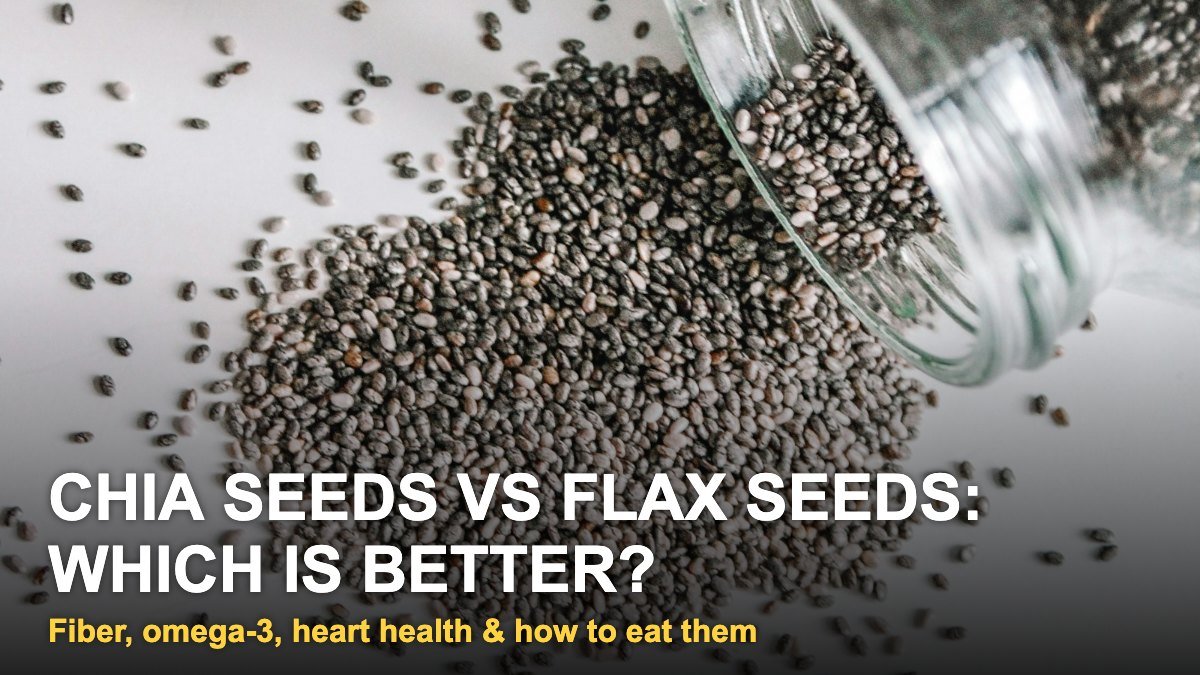
Chia seeds and flax seeds are two of the most popular “superfood” seeds, and they often sit side by side on the same shelf. Both are tiny, both are rich in fiber and plant omega-3 fats, and both are easy to add to breakfast. But they are not the same. Here is how chia seeds and flax seeds compare on nutrition, digestion, heart health and blood sugar, plus which one may suit you better.
Chia vs Flax: Nutrition at a Glance
The numbers below are approximate values for 1 ounce (about 28 grams, roughly 2 to 3 tablespoons) based on USDA data. Exact values vary by brand.
| Per 1 oz (28 g) | Chia seeds | Flax seeds |
|---|---|---|
| Calories | About 138 | About 150 |
| Fiber | About 10 g | About 8 g |
| Protein | About 4.7 g | About 5 g |
| Plant omega-3 (ALA) | About 5 g | About 6.4 g |
| Calcium | About 180 mg | About 70 mg |
| Lignans (plant compounds) | Low | Very high |
| Best eaten | Whole or soaked | Ground |
Fiber and Digestion
Chia seeds are one of the richest fiber sources you can eat, with close to 10 grams per ounce. Much of it is soluble fiber that forms a gel when it meets liquid. Chia can absorb many times its own weight in water, which is why it turns into a pudding when soaked overnight.
Flax seeds are also high in fiber, with a mix of soluble and insoluble fiber. Both seeds may help keep you regular, but they work best when you drink enough water. Adding a lot of either seed suddenly can cause bloating or gas, so start with a small amount and build up slowly.
Winner: Chia, by a small margin, for total fiber.
Omega-3 Fats and Heart Health
Both seeds are excellent plant sources of alpha-linolenic acid (ALA), a type of omega-3 fat. Flax seeds contain slightly more ALA per ounce. ALA is linked with heart health in research, although the body converts only a small part of it into the EPA and DHA found in fish.
Flax has been studied more for heart markers. Several studies suggest that regularly eating ground flaxseed may help lower blood pressure and LDL (“bad”) cholesterol slightly, especially in people with high readings. Chia research in humans is smaller and more mixed.
Winner: Flax, for more ALA and stronger heart research.
Lignans and Antioxidants
Flax seeds are the richest known food source of lignans, plant compounds with antioxidant effects that are being studied for heart and hormone health. Chia seeds contain antioxidants too, but far fewer lignans.
Winner: Flax.
Blood Sugar
Both seeds are low in digestible carbs and high in fiber, which helps slow down how fast sugar enters your blood. Adding chia or ground flax to a meal may help reduce the blood sugar spike after eating. Some small studies suggest ground flaxseed may help people with type 2 diabetes improve blood sugar markers, but the effects are modest.
Winner: Tie. Both are good choices.
Calcium and Minerals
Chia seeds provide much more calcium than flax, about 14% of the daily value per ounce. Both seeds also contain magnesium, phosphorus and manganese.
Winner: Chia, especially if you don’t eat dairy.
Ease of Use
This is where the two seeds really differ:
- Chia seeds can be eaten whole. Your body can still absorb their nutrients, especially when they are soaked. They don’t go rancid quickly and can be stored at room temperature.
- Flax seeds should be ground. Whole flax seeds often pass through your gut undigested, so you miss most of the omega-3s and lignans. Ground flax goes stale faster, so keep it in an airtight container in the fridge.
Easy Ways to Eat Them
- Stir 1 to 2 tablespoons into oatmeal, yogurt or porridge.
- Blend into a smoothie.
- Make chia pudding by soaking chia seeds in milk overnight.
- Add ground flax to chapati dough, pancake batter or baked goods.
- Use a “flax egg” (1 tablespoon ground flax + 3 tablespoons water) in baking.
Who Should Be Careful
- People with swallowing problems should not eat dry chia seeds followed by water, as they swell quickly. Soak them first.
- If you take blood thinners or blood pressure medicine, talk to your doctor before eating large amounts every day.
- Anyone with a sensitive gut should start with 1 teaspoon and increase slowly.
Frequently Asked Questions
Which is healthier, chia seeds or flax seeds?
Neither is clearly healthier. Chia has more fiber and calcium, while flax has more omega-3 ALA and lignans and more research on heart health. Both are nutritious choices.
Can I eat chia and flax seeds together?
Yes. Many people mix them in smoothies, oats or yogurt to get the benefits of both. Just keep the total amount moderate and drink enough water.
How much should I eat per day?
Most studies use around 1 to 2 tablespoons a day. Start small and increase slowly to avoid bloating.
Do I need to grind chia seeds?
No. Chia seeds can be eaten whole or soaked. Flax seeds, on the other hand, should be ground so your body can absorb their nutrients.
The Bottom Line
Chia seeds and flax seeds are both excellent additions to a healthy diet. Choose chia if you want more fiber, calcium and an easy no-grind option. Choose ground flax if you want more omega-3 ALA, lignans and the strongest evidence for heart health. Or simply use both. If you have a medical condition or take medicines, check with your doctor before making big changes to your diet.
This article is for general information only and is not medical advice. Talk to your doctor or a registered dietitian about what’s right for you.