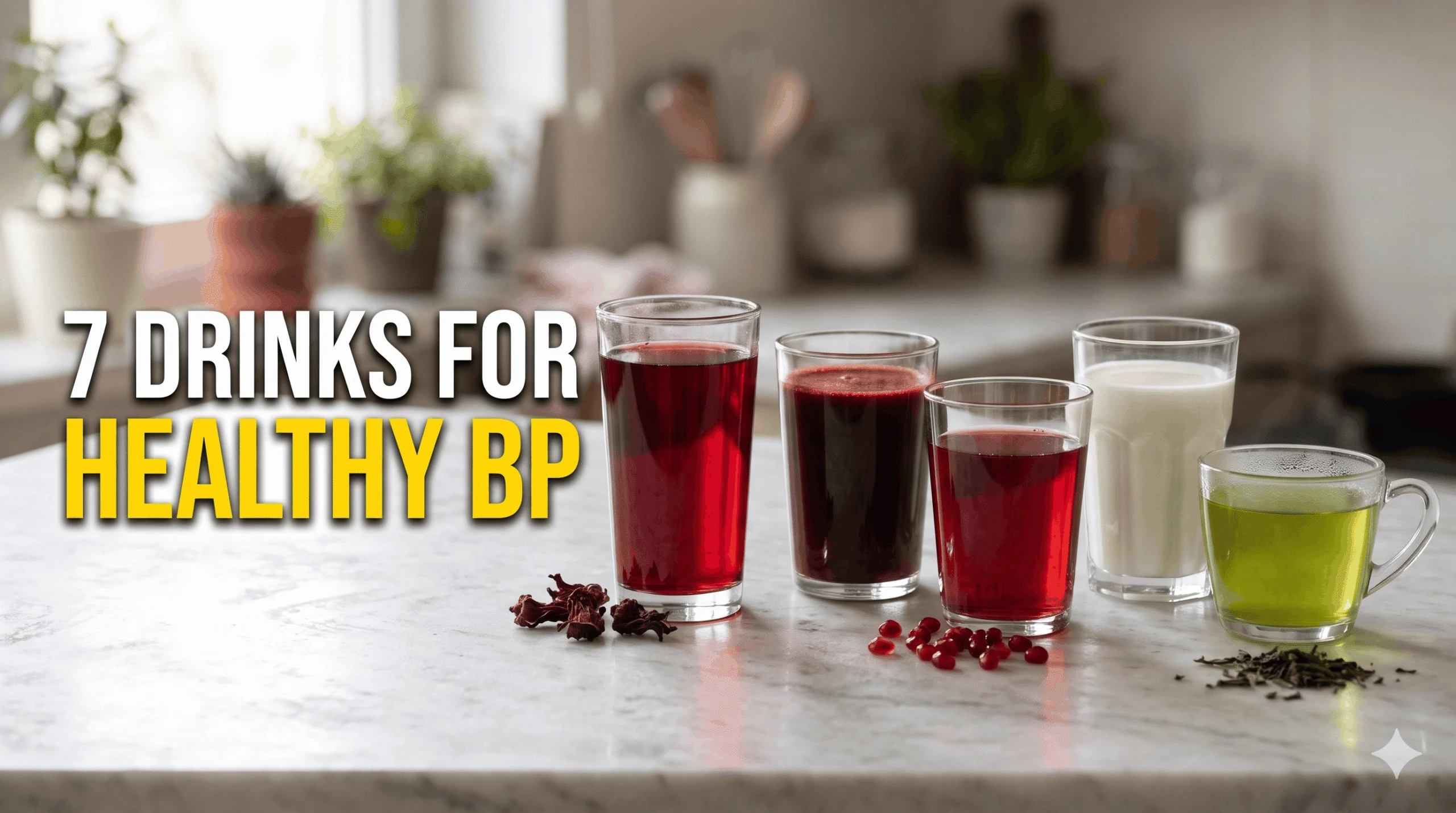
High blood pressure rarely causes symptoms, so many people don’t notice it until a routine check. Medication, less salt, exercise and good sleep matter most. But what you drink every day also adds up.
Some drinks have real research behind a small blood pressure benefit. Others quietly push it up. Here are 7 drinks worth adding, and 4 worth cutting back on.
Quick Comparison
| Drink | Key Nutrient | Evidence | How Much (studied amount) |
|---|---|---|---|
| Hibiscus tea | Anthocyanins | Good | 2–3 cups/day |
| Beet juice | Dietary nitrate | Good | 70–250 ml/day |
| Low-fat milk | Calcium, potassium | Good (as part of DASH diet) | 1–2 glasses/day |
| Pomegranate juice | Polyphenols | Moderate | About 150–250 ml/day |
| Unsalted tomato juice | Potassium, lycopene | Moderate | About 1 glass/day |
| Green or black tea | Catechins, flavonoids | Small effect | 2–3 cups/day |
| Coconut water | Potassium | Limited | 1 glass/day |
Effects are usually small, a few points of systolic pressure. They add up over time, but no drink replaces medicine.
1. Hibiscus Tea
This tart, ruby-red tea is one of the best-studied drinks for BP. In one well-known trial, adults with mildly high blood pressure drank 3 cups of hibiscus tea a day for 6 weeks. Their systolic pressure dropped by about 7 points on average, compared with about 1 point in the placebo group.
- Tastes great hot or iced
- Naturally caffeine-free
- Avoid in pregnancy. If you take BP medicine, check with your doctor first, because it can add to the medicine’s effect.
2. Beet Juice
Beets are rich in nitrate, which your body turns into nitric oxide. Nitric oxide helps blood vessels relax. Reviews of trials show regular beet juice can lower systolic pressure by around 4–5 points in many people, with the effect showing within a few hours.
- Start with half a glass, since it’s quite earthy
- Skip strong antibacterial mouthwash for a few hours after drinking it. It kills the mouth bacteria that help convert nitrate.
3. Low-Fat Milk
The DASH diet, one of the most proven eating plans for lowering blood pressure, includes 2–3 servings of low-fat dairy a day. Milk gives you calcium, potassium and magnesium together, all of which help regulate blood pressure.
- Choose low-fat or skimmed milk
- If you’re lactose intolerant, try lactose-free milk or curd/yogurt
4. Pomegranate Juice
Pomegranates are packed with polyphenols, plant compounds with antioxidant effects. A review of clinical trials found that pomegranate juice lowered systolic blood pressure by around 5 points on average.
- Pick 100% juice, not “pomegranate drink,” which is mostly sugar
- Or eat the seeds whole for the fiber
5. Unsalted Tomato Juice
Tomatoes are rich in potassium, which helps your body flush out extra sodium. In a year-long Japanese study, people with untreated high blood pressure who drank unsalted tomato juice daily saw their systolic pressure drop by around 4 points.
- The word “unsalted” is everything. Regular packaged tomato juice can contain a lot of sodium, which defeats the purpose.
- Homemade is easiest: blend fresh tomatoes with a pinch of black pepper and roasted cumin
6. Green or Black Tea
Regular tea drinking is linked with a small drop in blood pressure, around 1–2 points on average in reviews of studies. That’s modest, but it’s an easy swap if you currently drink sugary drinks.
- Keep the sugar low
- Don’t overdo it. A lot of caffeine can raise BP briefly in some people.
7. Coconut Water
Coconut water is naturally high in potassium, about 600 mg per cup. Direct research on BP is limited, but it’s a far better choice than sodas or packaged juices.
- Pick plain, unsweetened coconut water
- People with kidney disease should avoid high-potassium drinks unless their doctor says it’s okay
Drinks to Cut Back On
- Alcohol: Regular drinking raises blood pressure. Less is better.
- Energy drinks: High caffeine and sugar can spike BP.
- Sugary sodas and packaged juices: These lead to weight gain, which raises BP over time.
- Grapefruit juice (if you’re on BP medicine): It can interfere with some BP drugs, like certain calcium channel blockers. Ask your doctor.
How to Get the Most Benefit
- Be consistent. Most benefits fade within a day or two, so regular daily habits matter more than one big glass.
- Watch the sodium. Check labels on packaged drinks, especially tomato and vegetable juices.
- Pair drinks with good food. Eat more vegetables and fruits, and less salt and processed food.
- Check your BP at home once or twice a week to see what actually works for you.
FAQs
1. Which drink lowers blood pressure the fastest?
Beet juice shows effects fastest, often within 2–3 hours of drinking it in studies. The effect is temporary, though, so it needs to be taken regularly.
2. Can these drinks replace my BP medicine?
No. They can support healthy blood pressure, but never stop or change your medicine without talking to your doctor.
3. Is coffee bad for high blood pressure?
Coffee can raise BP for a few hours, especially in people who don’t drink it often. For most regular drinkers, 1–2 cups a day are generally considered fine, but ask your doctor if your BP is high.
4. How much water should I drink for healthy BP?
There’s no special BP amount. Staying well hydrated supports overall heart health. Most adults do well by drinking enough that their urine stays pale yellow.
5. Is lemon water good for blood pressure?
Lemon water is a healthy, low-calorie drink, but there’s limited direct evidence that it lowers BP. It’s a good swap for sugary drinks.
Disclaimer: For general information only; not a substitute for professional medical advice.